Planning a project near the waterline at High Rock Lake? That 100-foot setback can make or break your design, timeline, and budget. If you own or are buying a lakefront property, you want clear answers on what you can do, who approves it, and how to avoid costly missteps. This guide explains the 100-foot forested buffer in plain English so you can move forward with confidence. Let’s dive in.
What the 100-foot setback means
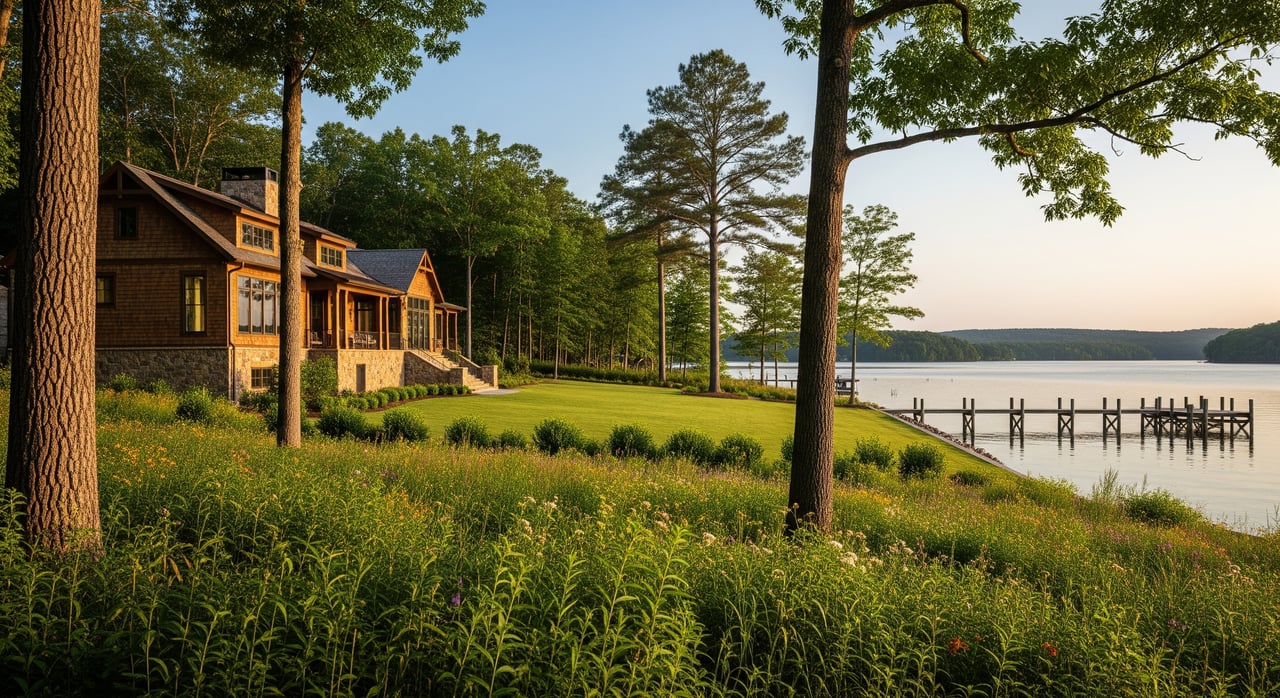
The 100-foot setback at High Rock Lake refers to a forested buffer measured inland from the lake’s normal high-water line. Within this zone, tree removal and construction are limited to protect water quality, wildlife, and shoreline stability. You can still create access and enjoy your property, but you need to plan carefully and follow the rules.
Who sets and enforces the rules
- The lake’s Shoreline Management Plan (SMP) is the controlling document for shoreline uses and buffers.
- County zoning and building codes apply on top of the SMP and may be stricter in some areas.
- State and federal laws can apply if your work touches wetlands or the lake bottom.
If you plan any work in the buffer, start by contacting the lake’s SMP manager, your county planning/building office, the NC Department of Environmental Quality (Division of Water Resources) for wetlands or water quality questions, and the U.S. Army Corps of Engineers for possible federal permitting.
How the 100 feet is measured
The 100 feet is typically measured horizontally from the lake’s ordinary high-water mark or normal high-water line. For permitting, you may need a surveyor or qualified professional to locate that line and plot the buffer on your site plan. The SMP explains the exact reference point and any measurement rules.
What you can do vs. what you cannot
Every SMP is specific, but most treat the 100-foot buffer as a place to keep trees and native vegetation. Here is what is usually allowed and restricted.
Commonly allowed with simple approval
- A narrow, unpaved footpath to the shore, kept to about 3 to 4 feet wide and routed with curves to reduce erosion.
- Selective pruning of small lower limbs to open a view while keeping the forest canopy.
- Removing invasive plants and replacing them with native shrubs and groundcovers.
- Small, moveable seating like folding chairs or a small bench that does not need a foundation.
- Restoration plantings or bioengineering along the bank to improve stability and water quality.
- Discrete stepping surfaces that are permeable and do not require excavation or fill.
Commonly restricted or prohibited
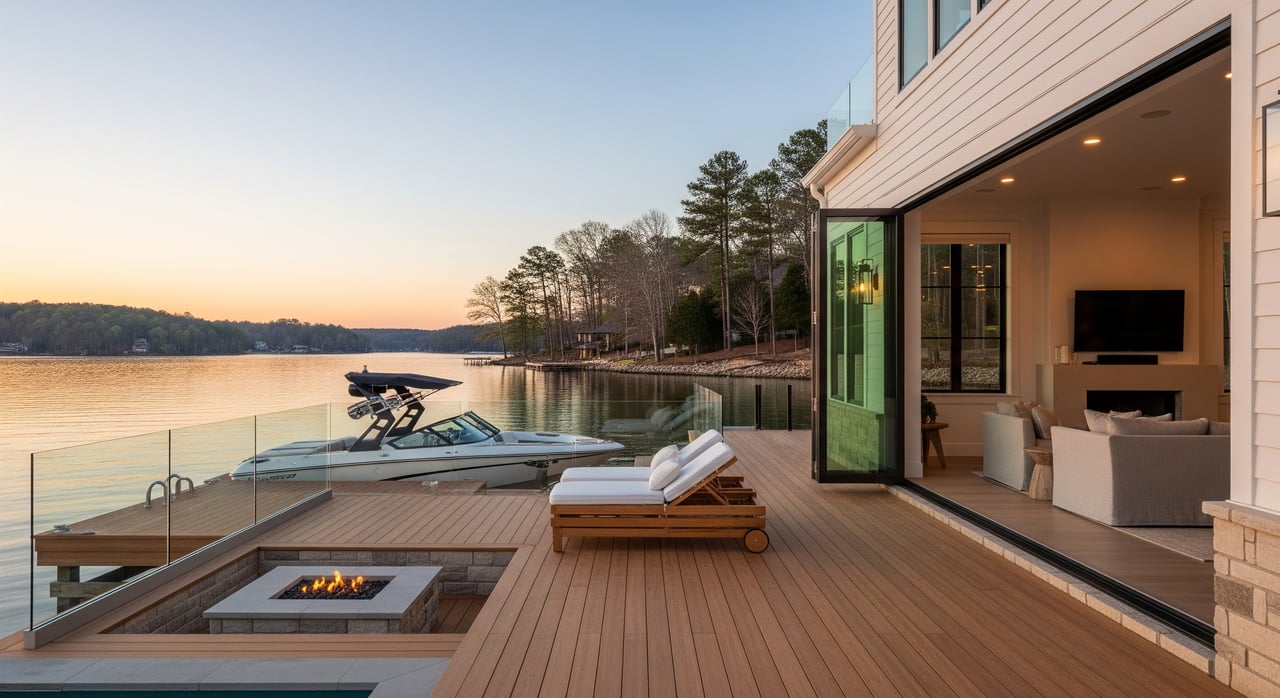
- Permanent buildings, decks, patios, sheds, or other fixed structures in the buffer.
- New septic drain fields or major utilities placed within the 100-foot zone.
- Large-scale grading, fill, or impervious hardscaping like poured concrete pads.
- Clearcutting or removing large trees in a way that changes the forested character.
- Vehicle driveways or parking within the buffer, except where a specific approval is granted for limited access.
- Shoreline armoring that is not allowed by the SMP or other regulators.
Docks, ramps, and water-dependent structures
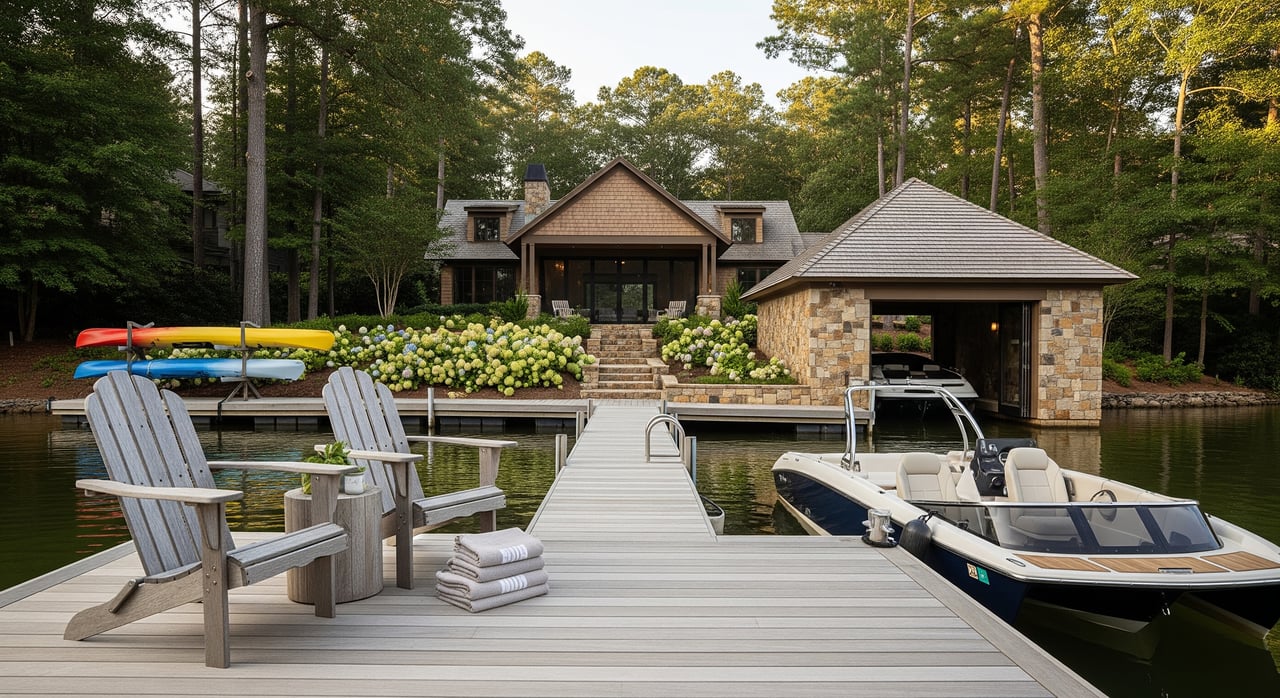
Docks and boat launches are regulated separately from the upland buffer. You will likely need the SMP manager’s approval and may also need state or federal permits. Having a dock approval does not automatically allow other construction within the upland 100-foot zone.
Why the buffer matters
- It filters runoff so fewer sediments and nutrients reach the lake.
- It stabilizes soils and reduces shoreline erosion.
- It supports habitat and lake ecology.
- It maintains the scenic character that makes lakefront living valuable.
Approvals and your permit path
Managing your approvals in the right order saves time. Use this sequence as your baseline plan.
Step-by-step process
- Confirm the control documents. Get the current SMP and shoreline maps from the lake’s manager or licensee.
- Locate the boundary. Hire a surveyor or qualified professional to identify the high-water line and plot the 100-foot buffer on your survey.
- Talk with the SMP manager. Ask what is pre-approved, what needs a simple approval, and what requires a formal application.
- Check with your county. Verify zoning setbacks, land-disturbance thresholds, and building permit needs.
- Determine if state or federal permits apply. If you plan grading, fill, or work in wetlands or the lake bottom, contact NC DEQ and the U.S. Army Corps of Engineers.
- Expect conditions and inspections. Approvals often require erosion controls, replanting, or limits on tree removal.
Typical timelines
- Simple SMP approvals for paths or selective vegetation work: weeks.
- County permits for small projects: weeks to a couple months based on workload.
- USACE or NC DEQ permits for dredge/fill or wetland impacts: several months, often 60 to 180 days or longer depending on scope.
Plan for parallel submissions only when your design can meet all agencies’ conditions. Coordination up front prevents revisions later.
Documentation to prepare
Having a clean package speeds review and reduces questions.
- Property survey showing the high-water line and the 100-foot buffer.
- Site plan with proposed work, dimensions, and erosion control details.
- Current site photos.
- Vegetation plan that lists removals and native replacements, including spacing and sizes.
- Construction sequence and access routes to limit disturbance.
- Proof of any required neighbor or HOA notifications.
Low-impact design strategies that get approved
You can enjoy the lake and keep projects compliant when you plan with the buffer’s purpose in mind.
Paths and access
- Keep paths narrow and curving, and follow natural contours to avoid cutting into slopes.
- Use permeable materials like mulch, crushed stone, timber steps, or short boardwalks.
- On steeper grades, add water bars or small grade breaks to slow and spread runoff.
Seating and viewing
- Use portable seating or a small, non-anchored bench. If you want a fixed bench, place it outside the 100-foot zone when possible.
- Keep seating on naturally stable spots and pair with native understory plantings.
Vegetation and trees
- Retain canopy trees. Create view corridors with careful pruning rather than removals.
- Replace any removals with native species that fit lakeshore conditions.
- Target invasive species first to improve buffer health without heavy disturbance.
Stabilization and drainage
- Favor bioengineering like live stakes, coir logs, and native plantings over vertical walls.
- Spread runoff through vegetated areas instead of channeling it directly to the lake.
Accessibility
- ADA-accessible routes may require more review. Use switchbacks, boardwalks, and minimal grading to reduce impacts.
Quick pre-work checklist
- Get and read the current SMP for High Rock Lake.
- Call your county planning and building offices to confirm local requirements.
- Hire a surveyor or environmental consultant to locate the high-water line and plot the buffer.
- Draft a slim, low-impact concept first. Start with a narrow path, selective pruning, and native plantings.
- Ask the SMP manager if your scope needs a permit, a simple approval, or just notification.
- Confirm whether USACE or NC DEQ permits are needed. Request a jurisdictional determination if wetlands or in-lake work is possible.
- Build erosion controls and native replacement plantings into your plans.
Red flags that usually trigger formal permits
- Any excavation, fill, or grading within the buffer.
- Fixed structures with foundations within the 100-foot zone.
- New impervious surfaces like slabs or large pavers.
- Work in the lake basin, docks, ramps, or impacts to wetlands.
Buying or selling near the 100-foot buffer
If you are evaluating a lakefront property, factor the setback into your plan from day one. You can still create a beautiful, functional shoreline experience with low-impact design and the right permits. A realistic scope, a measured site plan, and early talks with the SMP manager help you avoid delays and surprises during due diligence.
If you are selling, clear documentation and photos of compliant improvements, native plantings, and any past approvals can reduce buyer questions and support confidence in the property.
Ready to discuss how the 100-foot setback could affect your move or sale strategy around High Rock Lake? Book a Meeting with Unknown Company to align your plan, timeline, and budget with local rules.
FAQs
What is the 100-foot setback at High Rock Lake?
- It is a forested buffer measured inland from the lake’s normal high-water line where tree removal and construction are limited to protect the shoreline.
How is the 100-foot buffer measured on my lot?
- It is typically measured horizontally from the ordinary high-water mark; a surveyor or qualified professional may need to locate that line for your permit documents.
Can I remove trees to improve my view?
- Selective pruning and limited removals may be allowed, but clearcutting and removal of large canopy trees are usually restricted and may require approvals and replacement plantings.
Can I build a dock if the 100-foot setback exists?
- Docks are regulated separately from the upland buffer and usually require approvals from the SMP manager and possibly state or federal permits.
Who should I contact before starting work?
- Start with the lake’s SMP manager, your county planning/building office, the NC Department of Environmental Quality for water quality or wetlands questions, and the U.S. Army Corps of Engineers if in-lake work is planned.
How long do approvals usually take?
- Simple buffer work can take weeks, county permits can take weeks to a couple months, and state or federal permits can take several months depending on scope.
Do older properties or existing docks exempt me from the buffer rules?
- No. Existing features do not automatically waive buffer protections; new work must meet current SMP and permitting requirements.
What happens if I work without approval in the buffer?
- You risk fines, stop-work orders, restoration requirements, and delays that increase costs and extend timelines.
How does the 100-foot setback affect home value when buying or selling?
- It sets realistic limits on lakeside construction, but compliant, low-impact improvements and documentation can enhance buyer confidence and marketability.